Table Of Content
When Napoleon lived there under guard there was standing water under the floor, water running down the walls, rats were everywhere and there was a permanent musty smell, said Dancoisne-Martineau. He choose to present the house the way it was the day Napoleon died -- minus the rats and dampness. Based on the description, scientists put forward other theories as to why he died – which included arsenic poisoning. “An international campaign was conducted with the Napoleon Foundation to raise funds and it has since garnered 1.5 million euros,” said the curator, with a smile. When Napoleon lived there under guard “there was standing water under the floor, water running down the walls, rats were everywhere and there was a permanent musty smell,” said Dancoisne-Martineau.
Search form
David Pryce, St. Helena’s self-professed “bug man,” has identified almost 1,400 insects on the island, of which almost 30 percent are endemic. This is only one of two places in the world where it grows, he tells us. “The other one is over there,” he says, pointing to the adjacent peak. Everything changed with the arrival of the new governor, Hudson Lowe. Lowe sent away Napoleon’s faithful aide Las Cases and banished the sympathetic Balcombes, accusing them of suspicious loyalty to the emperor. After his first night in Jamestown, he never set foot there again.
Longwood, Saint Helena
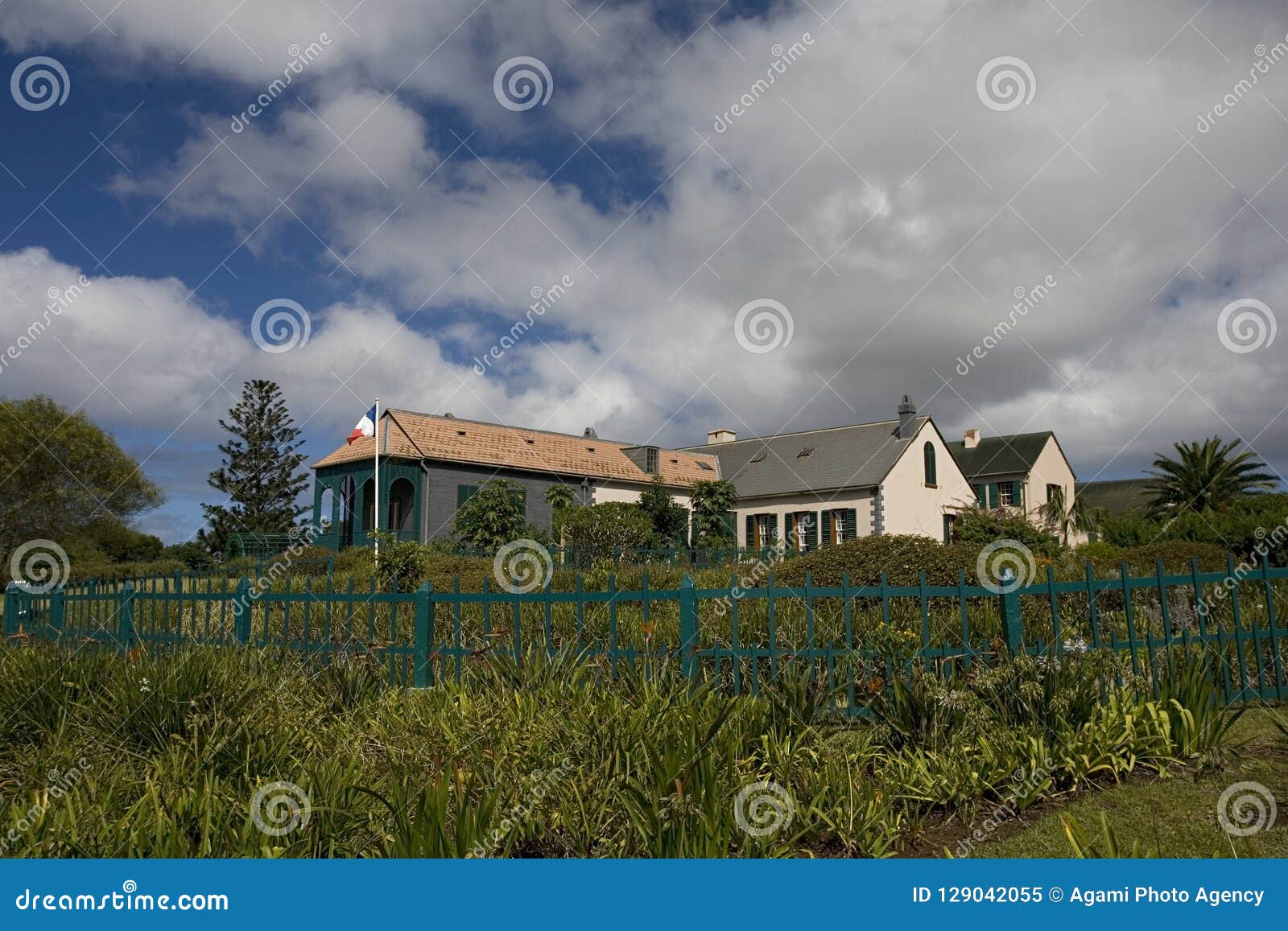
Longwood House was the residence of Napoleon Bonaparte, during his exile on St. Helena from 10th December 1815 until his death on 5th May 1821. It is situated in the district of Longwood, some 6 km (3.7 miles) from Jamestown and is one of the 7 Wonders of St. Helena. He’s behind the wheel of a battered 4x4, careening around St. Helena’s tortuous byways and finally going off-road to get us to South West Point. In this case, Napoleon is Merrill Joshua, the island’s tourism projects manager. And then there’s the Everlasting Daisy, another legacy of Napoleon’s gardening. One of his British admirers, Lady Holland, sent him some seedlings from his garden at Malmaison in Paris to cultivate at Longwood, but the flower quickly spread beyond his control, carpeting the island in glorious yellow blossoms.
A Brief History of Scent With Saskia Wilson-Brown
In Daepyeong, an archaeological site of the Mumun pottery period in Korea, longhouses have been found that date to circa 1100–850 BC. In these, several fireplaces were arranged along the longitudinal axis of the building. Later, the ancient Koreans started raising their buildings on stilts, so that the inner partitions and arrangements are somewhat obscure. The size of the buildings and their placement within the settlements may point to buildings for the nobles of their society or some sort of community or religious buildings. In Igeum-dong, an excavation site in South Korea, the large longhouses, 29 and 26 metres long, are situated between the megalithic cemetery and the rest of the settlement. The longhouses inhabited by the Iroquois were wood boards/bark-covered structures of standardized design "in the shape of an arbor" about 6 to 7 metres (20 to 23 ft) wide providing shelter for several related families.
Plan of Longwood House in 1821 at the time of Napoleon’s death

There is enough of that to satisfy us.” Thus, for the next 2,027 days, Napoleon could do only that. Back at the gardens of Longwood House, we skirt ponds filled with Wedgwood-colored water lilies and a basin curved into the shape of Napoleon’s famous bicorn hat. “Napoleon was a man of water,” Dancoisne-Martineau says as we watch our reflections ripple.
Sale and tax history for 846 S Longwood Ave

Our dinner is a conjuring trick, a historical séance in search of the man whose voice once echoed in this room with tales of war, conquest, glory and defeat, and of vanished dreams of empire and what might have been. Dancoisne-Martineau has already guided us through Longwood’s famous gardens, designed and cultivated by Napoleon himself and bursting with agapanthus flowers that match the blue and white in the French tricolor flying overhead. He leads us into the house through the billiard room, where the banished emperor laid out maps of his campaigns and notes for his memoirs on the table and used cue sticks to move them about. The consul points out the peepholes Napoleon carved into the green shutters with his penknife, so he could peer out at the world without the world seeing him. The holes at that height barely reach our shoulders, hinting at Napoleon’s smaller stature. The Iroquois Confederacy (Haudenosaunee) was made of the Seneca, Cayuga, Onondaga, Oneida and Mohawk tribes.
In 1686, Halley published the second part of the results from his Helenian expedition, being a paper and chart on trade winds and monsoons. In this, he identified solar heating as the cause of atmospheric motions. He also established the relationship between barometric pressure and height above sea level. His charts were an important contribution to the emerging field of information visualisation. This room was added in 1815 by the carpenters from the HMS Northumberland.
The platform on the back is used by the women for their everyday activities. Cabinet de l’Empereur (The Emperor’s Study, used after Napoleon’s death as a Mortuary Chapel)This small room, with no fireplace, was one of the least comfortable in the house, more like a cellar, according to Napoleon. The furnishings during the first years of the exile were spartan. This was where Napoleon sat for hours with Las Cases father and son around a work table, while books and notes were placed on planks on trestles. A camp bed stood opposite the window, where Napoleon sometimes took a nap or slept at night, alternating with that in the adjoining bedroom.
Malvern mansion with landscaping by Longwood Gardens architect to list for $4.25M - Philadelphia Business Journal - The Business Journals
Malvern mansion with landscaping by Longwood Gardens architect to list for $4.25M - Philadelphia Business Journal.
Posted: Sun, 14 May 2023 07:00:00 GMT [source]
Clowning for Novices: History and Practice With Rose Carver
“I want this to last after me,” said the smiling 49-year-old as his dog Papillon (Butterfly) lay at the foot of the bed where France’s greatest military hero died. One of the few Frenchmen on the British island of just 4,200 people, Dancoisne-Martineau manages a 16.5 hectare (40 acre) plot of French territory. Jamestown (AFP) — Michel Dancoisne-Martineau knows that the story of Napoleon’s life in exile is timeless — and irresistible. In 1959 a third property, the Briars, where Napoleon spent the first two months while Longwood was being prepared, was given to the French Government by its owner, Dame Mabel Brookes. Formerly the summer residence of the Lieutenant Governor, it was converted for the use of Napoleon in 1815. The building was chosen because it sits on an elevated plain, largely free from woodland, and thus was easier to secure.
The Dutch tried to take St. Helena in 1673 and failed, prompting the British to fortify the island with an estimated 230 gun turrets, traces of which still remain. St. Helena today is a British Overseas Territory, like Gibraltar or the Falklands, though in 1858, after years of enmity, the French bought back the two parcels of land containing Longwood House and Napoleon’s grave. Longwood House is a mansion in St. Helena and the final residence of Napoleon Bonaparte, the former Emperor of the French, during his exile on the island of Saint Helena, from 10 December 1815 until his death on 5 May 1821. In South America, the Tucano people of Colombia and northwest Brazil traditionally combine a household in a single long house. The Xingu peoples of central Brazil build a series of longhouses in circular formations forming round villages. The ancient Tupi people of the Brazilian coast used to do this as well.
As a result of the depredations of termites, in the 1940s the French Government considered demolishing the building. (King George VI commented on its state during his visit in 1947.) New Longwood and the Balcombe’s house at the Briars were both demolished at this time, but Longwood House was saved, and has been restored by recent French curators. Where does a fallen emperor fit in a world of international air travel and social media?
Since his death, it has been suggested that he died from cancer or was poisoned by British soldiers. A third theory says he died after inhaling toxic vapours from wallpaper which was laced with arsenic. Travellers looking to follow in Napoleon’s footsteps can board the Royal Mail ship St Helena from Cape Town (10 days at sea and four nights on St Helena). Tours of Napoleon’s residence, Longwood House and Briar’s Pavillion can be arranged through the St Helena Tourism Office once on island. Today Longwood House is considered to be the most poignant and atmospheric of all the Napoleonic Museums, as it is preserved with its original furniture from 1821, complemented by over 900 artifacts.
The refurbished apartments, with guest rooms and seminar facilities, will be inaugurated on October 15 to mark the 200th anniversary of Napoleon’s arrival on the island. After the Battle of Waterloo Napoleon surrendered to the English, hoping for lenient treatment. He must have never imagined they would banish him to a no-man’s land so far from Europe. The property includes Napoleon’s house in Longwood and ‘Geranium Valley (a.k.a. Sane Valley)’ -- the peaceful site where the ex-emperor wanted to be buried if his remains weren’t sent back to his beloved homeland. Dancoisne-Martineau, who took up his job in 1987, has spearheaded an ambitious project to renovate Longwood House, the home of the former emperor. Next year, St Helena plans to start weekly flight service from Johannesburg -- which has only been accessible by a five-day boat journey -- in what many islanders hope will result in a significant boost to the tourism sector.
A longhouse or long house is a type of building in several cultures. It is usually for many people living together.[1] Many buildings were made out of wood. They were for long-term usage and not for people who moved around a lot.
Over a thousand ships a year called at St. Helena in its heyday, but by the turn of the 19th century, barely a fifth of that stopped at the island. She polls her guests on what brings them to St. Helena, and says Napoleon seems to be the prime attraction. Her hotel, she says, is already sold out for May 2021, the bicentennial of his death. The British seized control of the island in the 17th century and sent settlers; survivors of the 1666 Great Fire of London received grants of land to farm.
The arsenic wallpaper has long since been replaced with a replica. Napoleon was initially buried at the SaneValley, his second choice of burial site, until the French were given permission to have his corpse returned to France, nineteen years after his death. Napoleon’s remains are now buried in Les Invalides in Paris, however visitors to St Helena can visit his empty tomb, which is enclosed with a fence and surrounded by an abundance of flowers and pines. Napoleon Bonaparte, the French military and political leader who rose to prominence during the latter stages of the French Revolution, was born in August 1769 and died on May 5th 1821.


No comments:
Post a Comment